Exoplanet Atmospheres
Theory • Modeling • JWST ObservationsOriginally trained in chemical engineering as a Physical Chemist, I develop first-principles models and combine observations to understand the physics and chemistry of Exoplanet Atmospheres. Ultimately, I hope to use these insights to identify Habitable Worlds and search for Life beyond Earth. Selected research highlights are presented below.
Automated Chemical Network Generation for Exoplanet Atmospheric Modeling
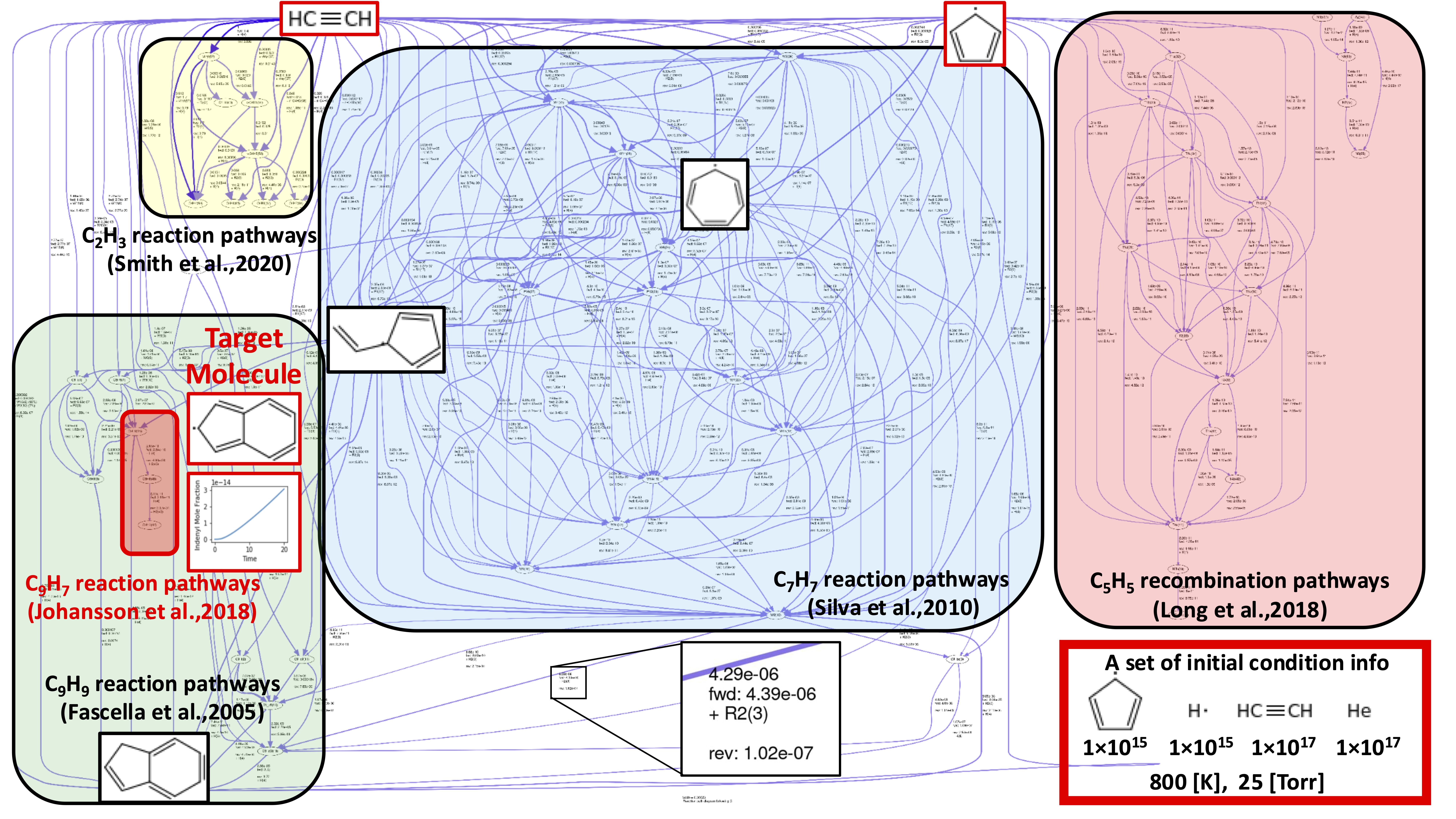
Chemical reaction networks are the foundation of exoplanet atmospheric modeling. Traditionally, these networks have been constructed manually,
making them subjective, labor-intensive, and increasingly difficult to maintain as chemical complexity grows. To address this challenge, I
developed an automated workflow that integrates the Reaction Mechanism Generator (RMG),
a rate-based algorithm widely used in chemical engineering to model combustion systems, with the
ExoPlanet Atmospheric Chemistry & Radiative Interaction Simulator (EPACRIS).
This innovative framework automatically generates chemically self-consistent reaction networks for diverse planetary atmospheres, enabling atmospheric models
to capture substantially greater chemical complexity while minimizing manual intervention. Since its development,
EPACRIS has been successfully applied to planetary atmospheres
spanning from terrestrial planets to gas giants. Together, RMG and
EPACRIS provides a scalable, first-principles framework for
interpreting the rapidly expanding stream of observations from the James Webb Space Telescope (JWST)
and future observatories.
Using Atmospheric CO2/CH4 to Infer the Envelope H2O/H2 Ratio
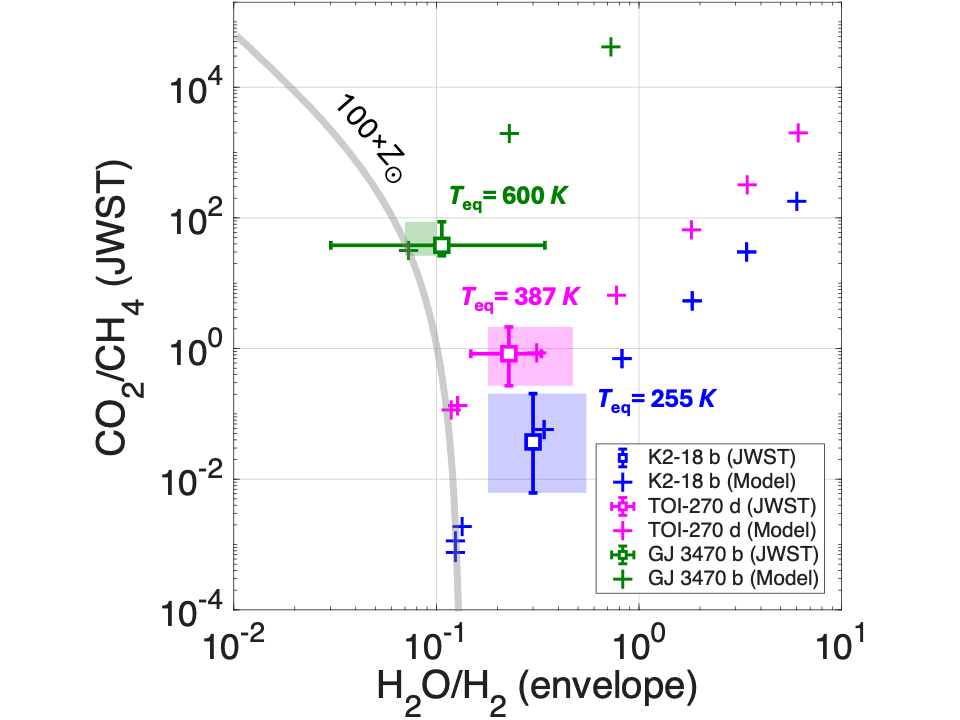
Constraining the H2O/H2 ratio of sub-neptunes is a central goal of exoplanet science,
as it reveals where the most common types of exoplanet formed relative to the "snowline" and provides key insights
into planetary formation mechanism. However, water is often difficult to measure because it can form clouds deep in the atmosphere, hiding it from observations.
While carbon monoxide has traditionally been used as an indirect tracer of the deep oxygen abundance, its weak spectral features make it challenging to detect with the
JWST.
To overcome this limitation, I developed a new chemical diagnostic that uses the atmospheric CO2/CH4
ratio to infer the bulk-envelope H2O/H2 ratio. This framework enables observers to constrain the bulk
oxygen abundance of gas giant planets and reconstruct their formation histories from atmospheric observations, such as using the JWST.
A First-Principles Framework for the Origin of Sub-Neptune Aerosols
Yang, Kempton & Savel, 2026, ApJL
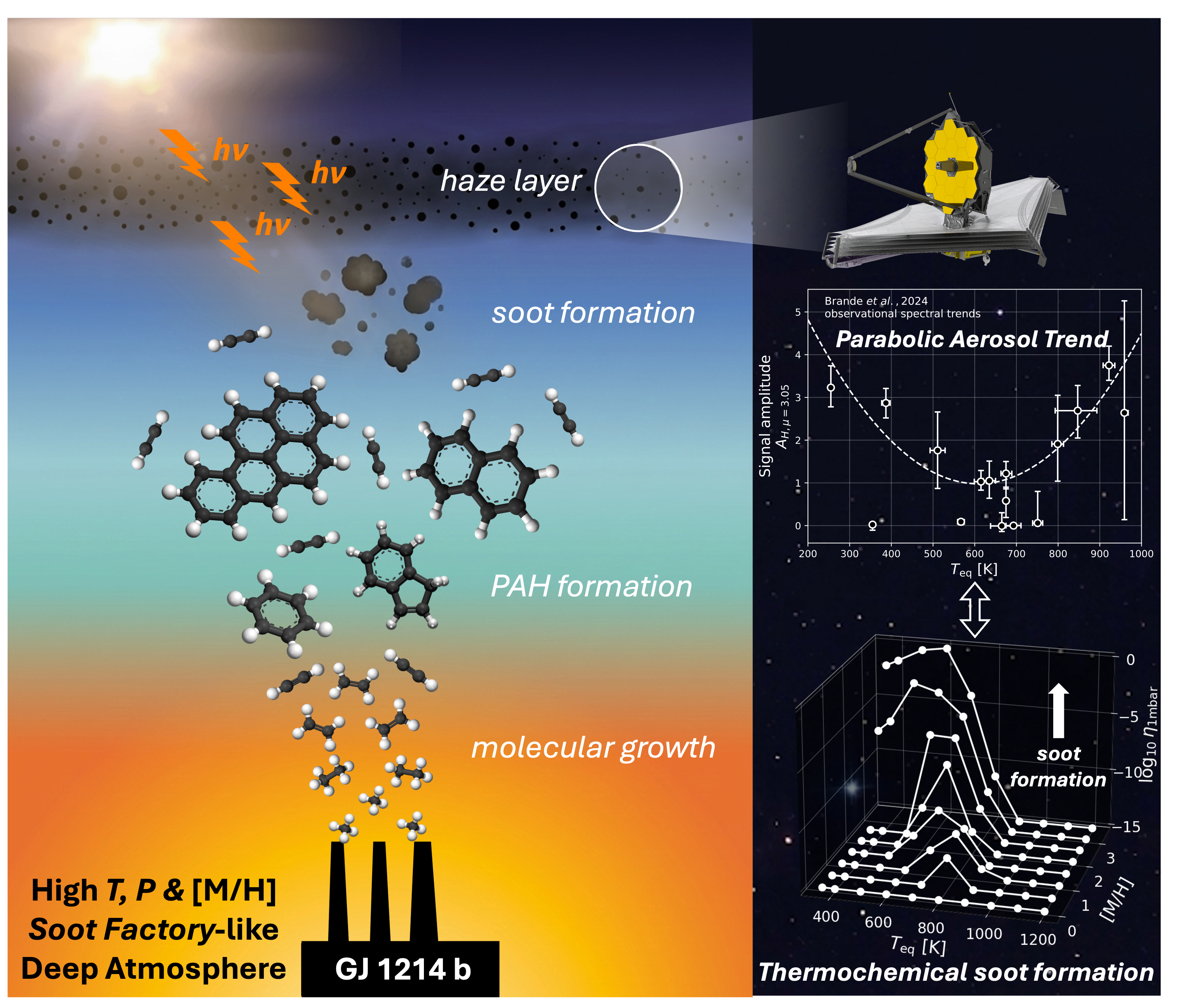
Many sub-Neptune exoplanets exhibit featureless transmission spectra, indicating that their atmospheres are obscured by
thick aerosol hazes. Recent JWST
population study also revealed a striking parabolic trend between atmospheric haziness and planetary temperature.
Remarkably, an almost identical trend has long been observed in combustion systems such as diesel and jet engines.
Drawing on concepts from Combustion Chemistry, I developed a first-principles framework showing that deep atmospheric hydrocarbon
chemistry naturally produces soot precursors that are transported upward to form high-altitude hazes. This mechanism successfully reproduces the observed parabolic trend, providing a
new framework for understanding aerosol formation in sub-Neptune atmospheres.
The work was featured in an official University of Chicago
press release and received broad coverage from multiple science news outlets, highlighting the interdisciplinary connection between chemical engineering and exoplanet science.
Uncovering Hidden Photochemical Pathways to CS2 in Exoplanet Atmospheres
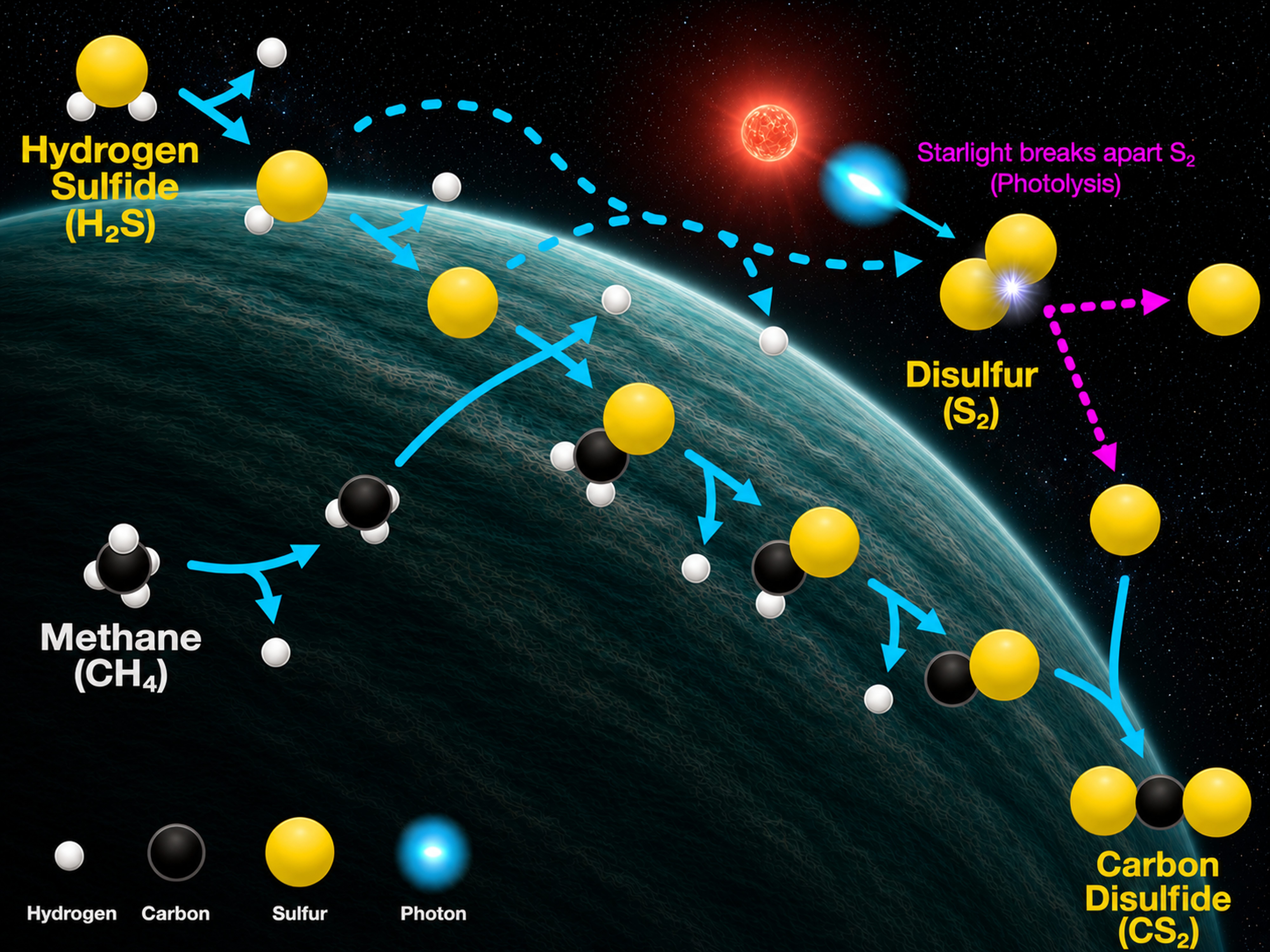
Sulfur chemistry is emerging as a powerful probe of exoplanet atmospheres, yet its chemical pathways remain poorly understood.
Motivated by the recent unexpected detections of CS2 (Carbon disulfide) in multiple temperate-to-warm exoplanet atmospheres, including TOI-6894 b, an exo-twin of Jupiter,
I was the first to identify the photochemical pathways responsible for CS2 formation and showed that the model robustly predicts CS2 across a broad range of planetary conditions. In particular, I identified S2 photolysis as the key process driving the CS2 formation.
For the first time in exoplanet science, I also applied sensitivity-analysis techniques widely used in Chemical Engineering
to systematically identify the reactions and physical parameters controlling CS2 formation and demonstrate the robustness of the predicted photochemistry. This work establishes CS2 as a new tracer of the chemical environments of distant exoplanets.
The work was featured in the official University of Chicago Physical Sciences Division News, highlighting its impact in exoplanet science.